
When Faith Becomes Control: Navigating Cult Dynamics in a Muslim Context
Is your community a source of peace or a tool for control? This guide explores the red flags of high control religious groups and how to reclaim your faith from cult dynamics.
1/28/20267 min read
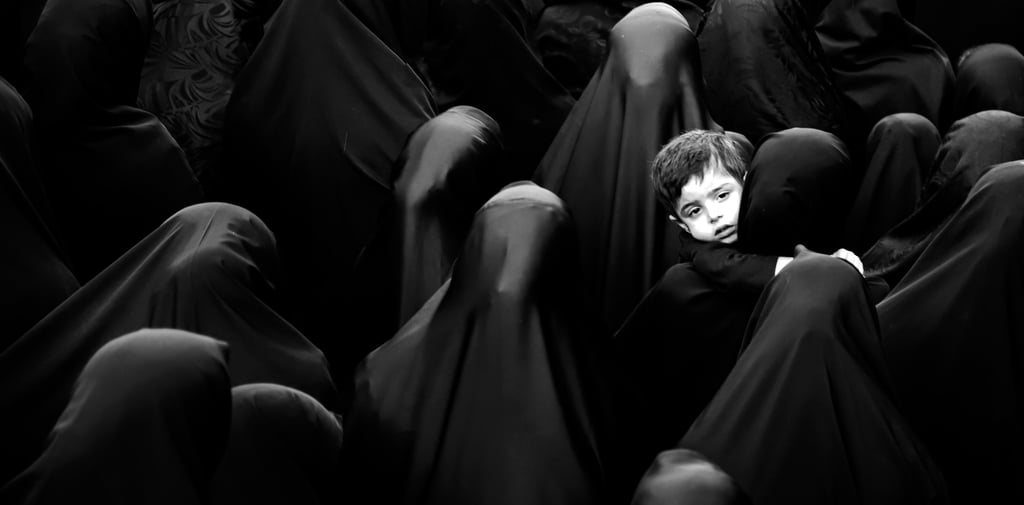
The pursuit of Ihsan (spiritual excellence) is one of the most beautiful aspects of Islam. For many, finding a jama’at or a close-knit circle of seekers provides the brotherhood and structure needed to grow.
However, throughout history, certain groups have used the language of the Deen to build high-control environments. These groups often look pious on the surface, but their internal mechanics contradict the Islamic principles of individual accountability and intellectual honesty.
The Red Flags: How to Identify a Muslim Cult
The line between a passionate community and a cult isn't always a brick wall, it’s a slippery slope. Here is how to tell if a religious circle is crossing that line.
1. The Infallible, sectarian Leader
In mainstream Islam, there is no obedience to the creation in disobedience to the Creator. Even the Sahaba questioned the Prophet (ﷺ) to understand his reasoning.
The Sign: The leader’s word, or their dreams, are treated as Wahy (revelation). If you question them, you are told you are spiritually diseased. Another scenario that is common is a sectarian one. They shame their followers for seeking knowledge or praying at other mosques, creating a clique. Anyone who challenges that is immediately ostracized as a punishment. This leads to a lot of trauma for the follower that has devoted their life to the group and has cut of all support systems and finds themselves isolated and all alone. A follower can be expelled from the group temporarily as a control tactic only to be reigned in and to make the abusive control even more encompassing, so the follower wont dare question the leader or other followers again. This mutes any discomfort a follower has which leads to great psychological harm and cognitive dissonance.
The Reality: No leader is above the Shari’ah. If they demand something that contradicts basic ethics or Islamic law, they are not a guide; they are a dictator.
"They have taken their scholars and monks as lords besides Allah" ( surah At Tawbah 9:31)
"Our lord, indeed we obeyed our masters and our dignitaries and they led us astray from the right way" (Surah Al Ahzab 33:67)
2. Isolation and Us vs. Them
Cults thrive on cutting you off from your support systems. They often claim they are the only 'Saved Sect'.
The Sign: You are pressured to stop attending your local Masjid or visiting your 'misguided' family.
The Reality: Islam emphasizes Silat ar-Rahim (maintaining family ties), even if your family practices differently. Isolation is a tool used to make the group your only source of reality.
Kindness Even in Disagreement
Cults often tell you to abandon parents, family and friends. Anyone who questions how you practice your religion. Usually family members are the first to call you out if they noticed you have been withdrawn and not yourself. The Quran says the exact opposite, even if your parents are actively trying to lead you away from Islam, you must still treat them with kindness.
"But if they pressure you to associate with Me what you have no knowledge of, do not obey them. Still, keep their company in this world with kindness..."
( Surah Luqman, 31:15)
The Right of the Womb
Allah warns against severing what He has ordered to be joined. This is a direct warning against the isolation tactics used by cults.
"Would you then, if you were given authority, spread corruption in the land and sever your ties of kinship?"
Surah Muhammad, 47:22)
The Prophetic Hadith: Maintaining Ties with Non-Believers
There is a famous story of Asma bint Abi Bakr (ra) whose mother was still a polytheist and came to visit her. Asma wasn't sure if she should welcome her.
Asma asked the Prophet (ﷺ): "My mother has come to me and she desires to receive a reward from me, shall I keep good relations with her?" The Prophet (ﷺ) said: "Yes, keep good relations with your mother."
(Sahih Bukhari)
The Prophetic Hadith: A Major Sin
The Prophet (ﷺ) made it very clear that cutting off family is not just a mistake, but a barrier to entering Jannah.
"The person who severs the bonds of kinship will not enter Paradise."
(Sahih Bukhari & Muslim)
3. Esoteric 'Secret' Knowledge
Islam is a transparent religion; the Quran and Sunnah are open to all.
The Sign: You are told there is secret knowledge (Batin) that you aren't 'ready' for, or that the leader has a hidden interpretation that overrides the plain text of the Quran.
The Reality: The Prophet (ﷺ) said, "I have left you upon a clear path; its night is like its day." There are no secret pillars in Islam. This is a vital distinction to make. In Islamic history, the concept of Ikhtilaf (respectful disagreement) was a mercy and a sign of intellectual depth. Cult-like scholars, however, replace this mercy of disagreement with a monopoly of truth.
The Death of Respectful Disagreement: Monopolizing the Truth
For over 1,400 years, the Islamic tradition has been built on the principle of Ikhtilaf (respectful disagreement). The great Imams of the past disagreed on many matters of jurisprudence and application, yet they prayed behind one another, respected one another, and famously said:
"My opinion is correct with the possibility of being wrong, and the opinion of another is wrong with the possibility of being correct."
A hallmark of a cult-like dynamic is the total rejection of this history. Certain figures today claim that their specific interpretation is the only valid one, discrediting the global community of scholars to ensure total loyalty. Instead of presenting their views as one valid school of thought among many, these figures claim their methodology is pure while everyone else’s is corrupted. They frame their specific interpretation as superior to the scholarship of other countries or historical eras.
They will tell you that the other Ulama (scholars) in other parts of the world are misguided. If they can prove that 'other scholars' are misguided by way of evidence, this is permissible, but other scholars should not be labelled as less than or unqualified for having different opinions on things you are ALLOWED to disagree on. By making you believe that every other scholar is deviant, they leave you with nowhere else to go for information except them.
Weaponizing 'The Only Right Path'
While Islam is a broad tent that has accommodated diverse cultural and scholarly expressions for centuries, these groups shrink that tent until only they fit inside.
They treat a secondary matter of Fiqh (where disagreement is historically allowed) as a matter of Aqidah (core creed). If you don't apply a Hadith exactly as they do, they don't just say you are mistaken, they say you are deviant or outside the fold.
Authentic Islam has always survived through consensus (Ijma) and the balance of different perspectives. When a scholar tells you to ignore the vast majority of the Muslim world’s scholarship, they are creating a bubble, not a community. The exception would be if scholars are warning against major sins like Shirk, Sihr (magic), murder etc. Then this would be considered commanding the good and forbidding the evil. However, the majority if not all scholars agree on the major sins, the issue is how the religion is applied in other areas where there has always been a difference of opinion.
To keep followers from looking elsewhere, they use labels to demonize other valid Islamic paths. They might label other scholars as government puppets, liberals, or innovators (Bid'ah) without a fair scholarly trial.
What this indoctrination does is make you afraid to read a book or listen to a lecture by anyone outside your specific circle, fearing you will be sent astray. This intellectual isolation is the exact opposite of the Quranic command to read and to ask the people of knowledge.
If a group's truth requires you to look down upon 1,400 years of diverse Islamic heritage and discredit every other scholar on earth, you aren't being led to the Sunnah, you are being led into a sectarian trap.
4. Spiritual Blackmail
The Sign: If you try to leave or disagree, you are threatened with "you are going astray!" and that usually insinuates that you will be among the people of hell fire.
The Reality: Your relationship with Allah is private. No human being holds the keys to your Paradise or Hell. Allah is the most merciful, most gracious, he alone decides someone's fate. Going against a group, ideology, scholar, imam does not doom you to hell. As human beings we have the right to question and reflect. We are also allowed to disagree. Allah has given us autonomy over our own decisions in this world by Allah's grace. We were not meant to be blind followers.
How to Safely Reclaim Your Faith
If you feel trapped, remember that leaving a group is not the same as leaving Islam. You are simply reclaiming your spiritual autonomy and coming to conclusions by questioning what you are learning and give yourself grace in your journey to learning your religion. Every believer walks on their own path.
The Silent Prep: Stop sharing doubts with group members. Build a secret escape fund and save important documents in a secure cloud drive.
Rebuild Your Tribe: Reach out to the family members the group told you to avoid. They are often your biggest allies in coming home.
You don't owe the leader a debate. Often, the safest exit is to simply stop showing up and block the members who try to guilt-trip you back.
Consult an Outside Scholar: Find a mainstream Imam who is known for being balanced.
Your accountability is to Allah alone.
On the Day of Judgment, the excuse "I was just following my leader" is explicitly rejected in the Quran (33:67). True guidance should bring you peace and clarity, not fear and isolation.
Leaving a toxic cult is an incredibly brave step, but you don't have to do it alone. In the UK and Europe, there are organizations specifically designed to help people navigate the psychological, social, and practical challenges of leaving closed religious communities.
Here is a list of trusted resources:
Specialist Cult & Religious Support (UK)
These organizations understand the specific mechanics of spiritual abuse and cults.
The Family Survival Trust: Provides information and support for individuals and families affected by cultic behaviour and coercive control.
Website: thefamilysurvivaltrust.org
Focus: Online support groups and psycho-education on how cults operate.
Hope Valley Counselling (Dr. Gillie Jenkinson): Specializes in the "Walking Free" model for survivors of cults and spiritual abuse.
Website: hopevalleycounselling.com
Muslim-Specific Support (UK)
If you wish to leave a specific group but remain connected to your faith or need culturally sensitive advice, these services can help.
Muslim Women’s Network (MWN) Helpline: Confidential and non-judgmental support for Muslim women facing any form of abuse or control.
Phone: 0800 999 5786
Website: mwnhelpline.co.uk
Muslim Youth Helpline (MYH): Faith-sensitive support for young Muslims in the UK via phone, email, and webchat.
Phone: 0808 808 2008
Website: myh.org.uk
Nour: Provides Islamic support and advice through advisors trained to understand domestic and spiritual abuse.
Website: nour-dv.org.uk
A Note on Your Safety
If you are currently in a situation where you feel physically unsafe or are being threatened by the group:
In the UK: Call 999 for emergencies or 101 for non-emergencies.
Safety Tip: If you are browsing these websites from a shared device, remember to use Incognito/Private Mode and clear your browser history afterward.
In search of light
Peace be upon you,
Sylvie :)
What are your thoughts? Do you have anything to share?
Please comment below :)
Connect
Reach out for support or thoughtful conversation
contact@theinsightfulheart.com
© 2025. All rights reserved.